Patchwork T-Shirt
T-shirt made from T-shirts

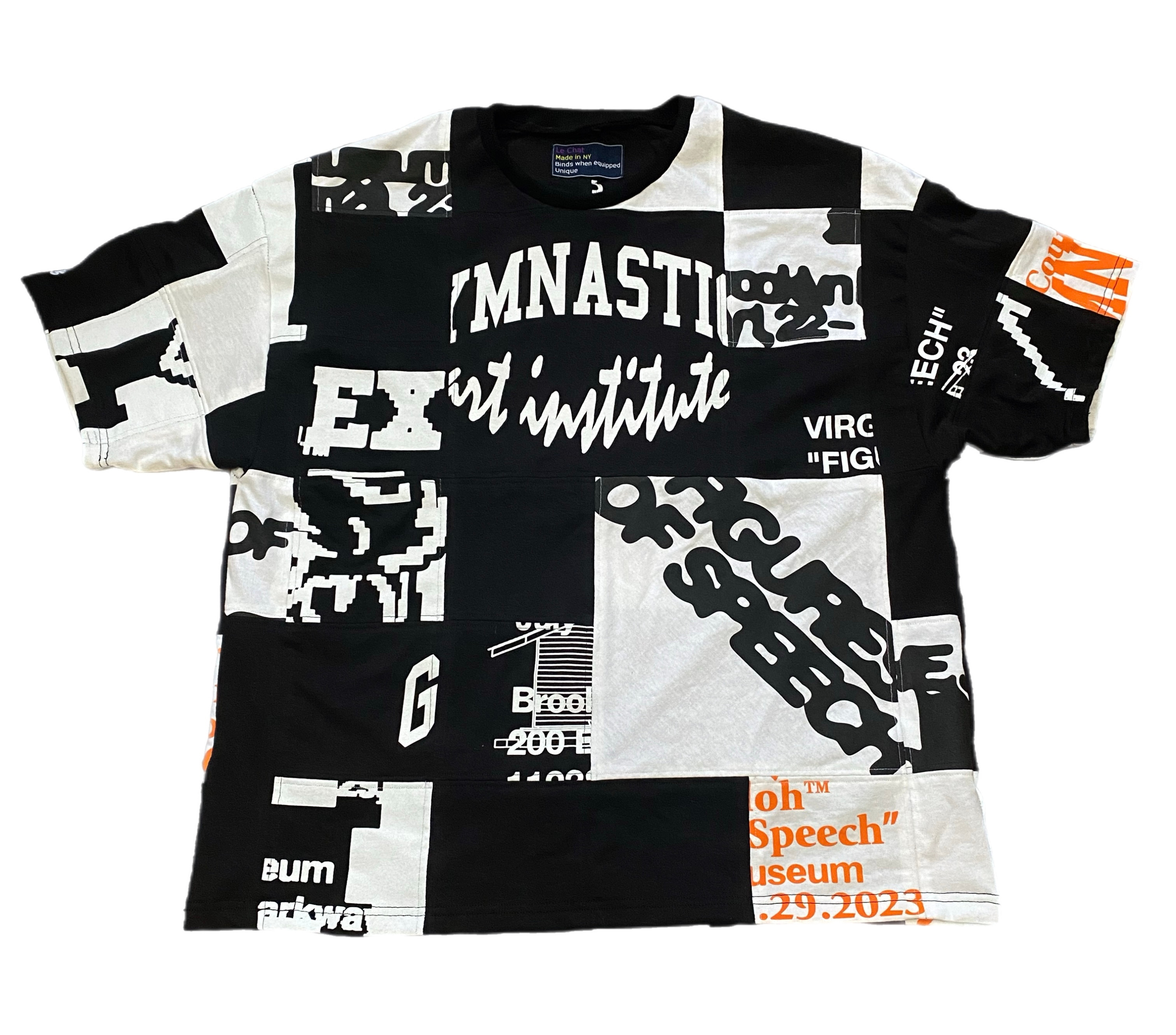
Once when visiting the Brooklyn Art Museum I noticed in the gift shop they were trying to get rid of merchandise from a previous exhibit Virgil Abloh “Figures of Speech”. At first I was mad because I paid $50 dollars for my shirt and now they were on sale for $5. However I saw opportunity in that I could now buy 10 shirts for the price of 1! When I see an item in abundance like this I usually start thinking creatively about how the items can be transformed. It also helped that the shirts were all XL+ which meant more fabric to work with.
I bought 5 shirts and brought them home. I traced a pattern from one of the XL shirts because I liked the fit and began cutting the shirts into squares. I cut both small and large squares. The large squares were 2x the small square so everything would fit geometrically together. I made sure to pay special attention to the printed graphics and where they were lining up.
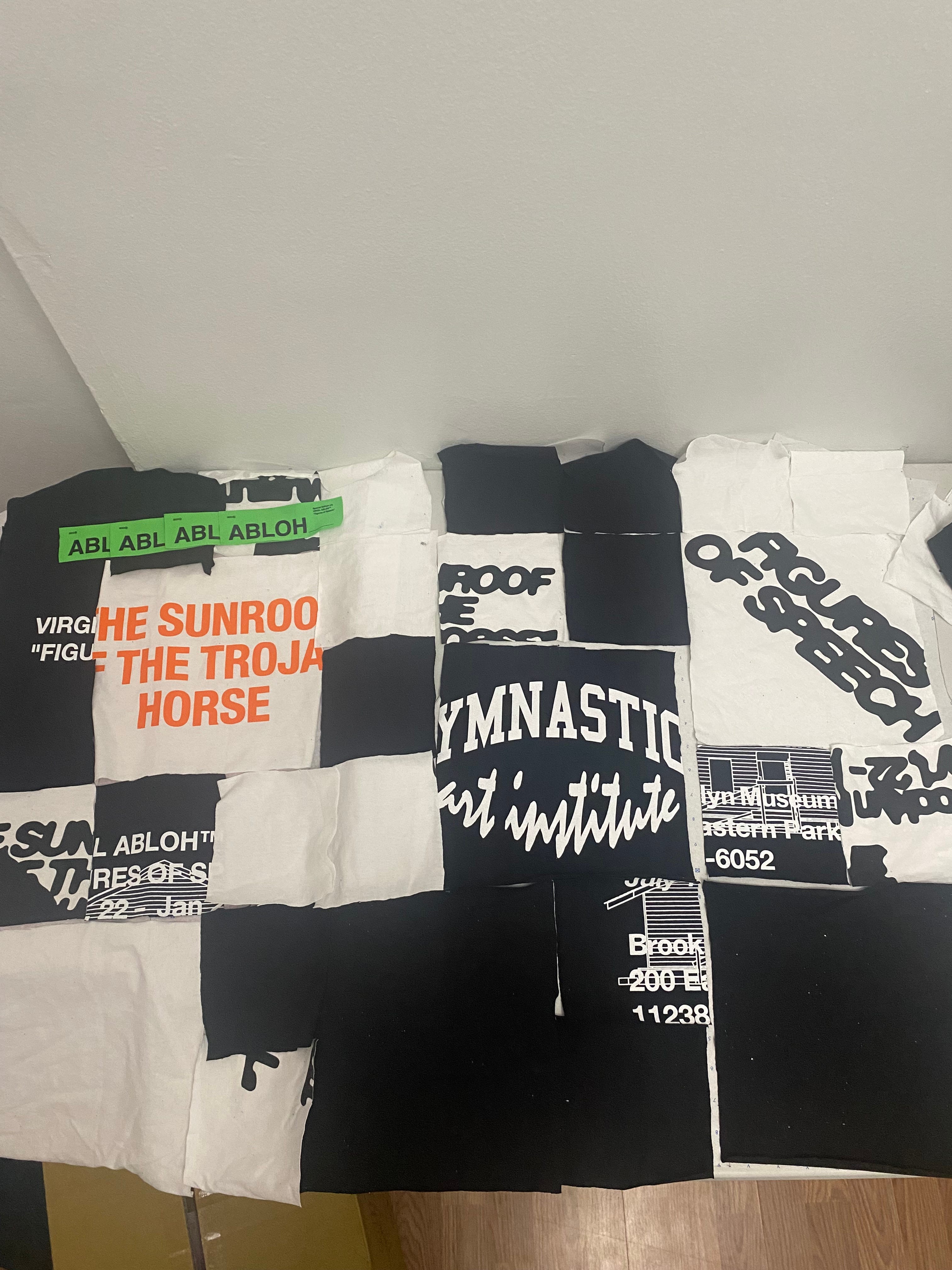
Once everything was cut and laid out I began sewing the pieces together as one giant textile. The big breakthrough for this step was using a walking foot on my machine. This foot, thats usually used by quilters, allowed me to sew two jersey knits together without the pieces bunching up in the presser foot. It even allowed me to top stitch the seams down which helps keep the seams from sticking toward your body while wearing. It was also important to use a delicate round tip needle on my machine as micro holes liked to show up along the way.
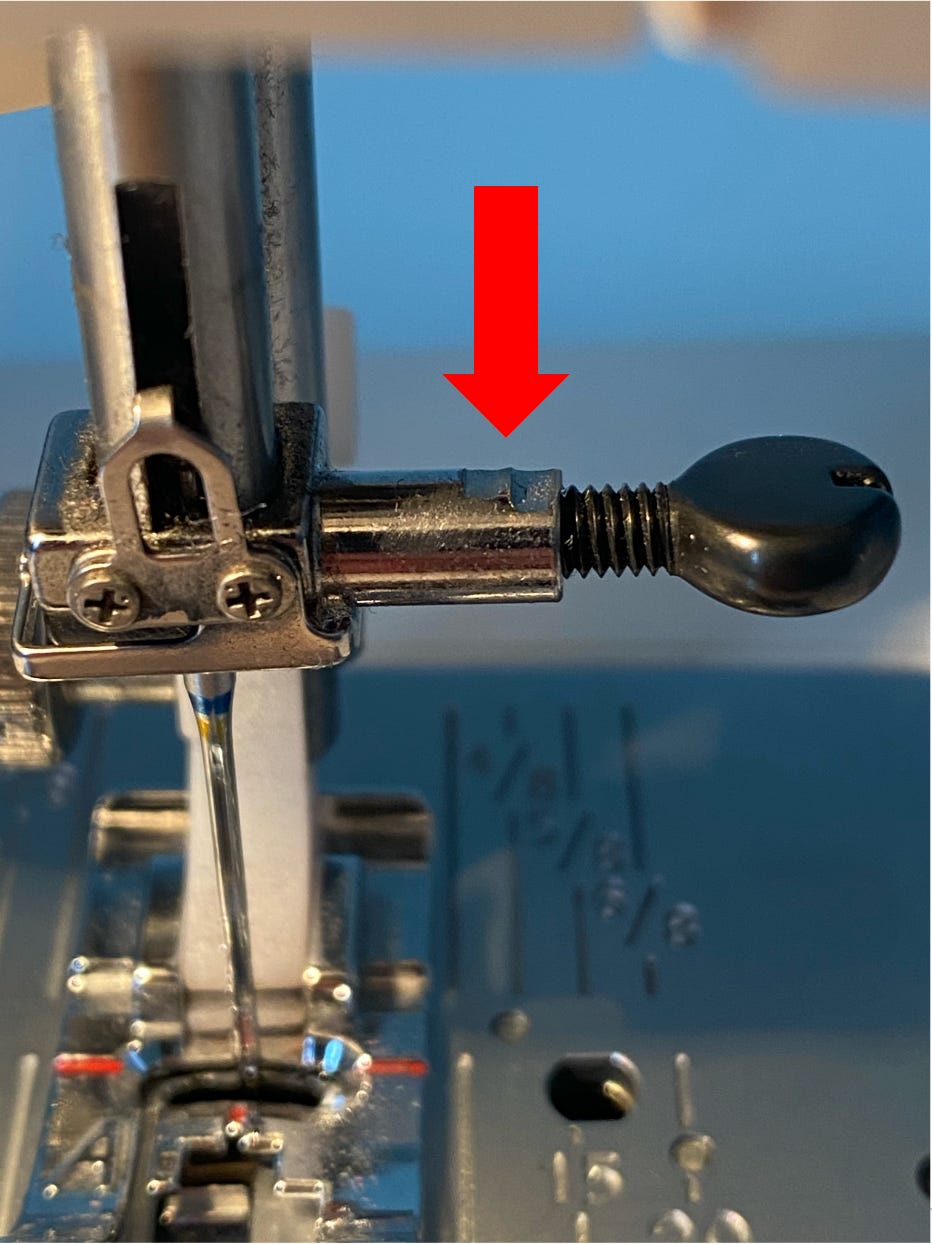
One thing to note is that the walking foot slowly chipped away at my machine. It may be hard to visualize if you have never used one before but using to the extent that I did created the above issue on my machine which would explain why I would randomly find metal fragments on my work! If I use this foot again I will have to find some way to protect my machine. Maybe ill use a rubber band?
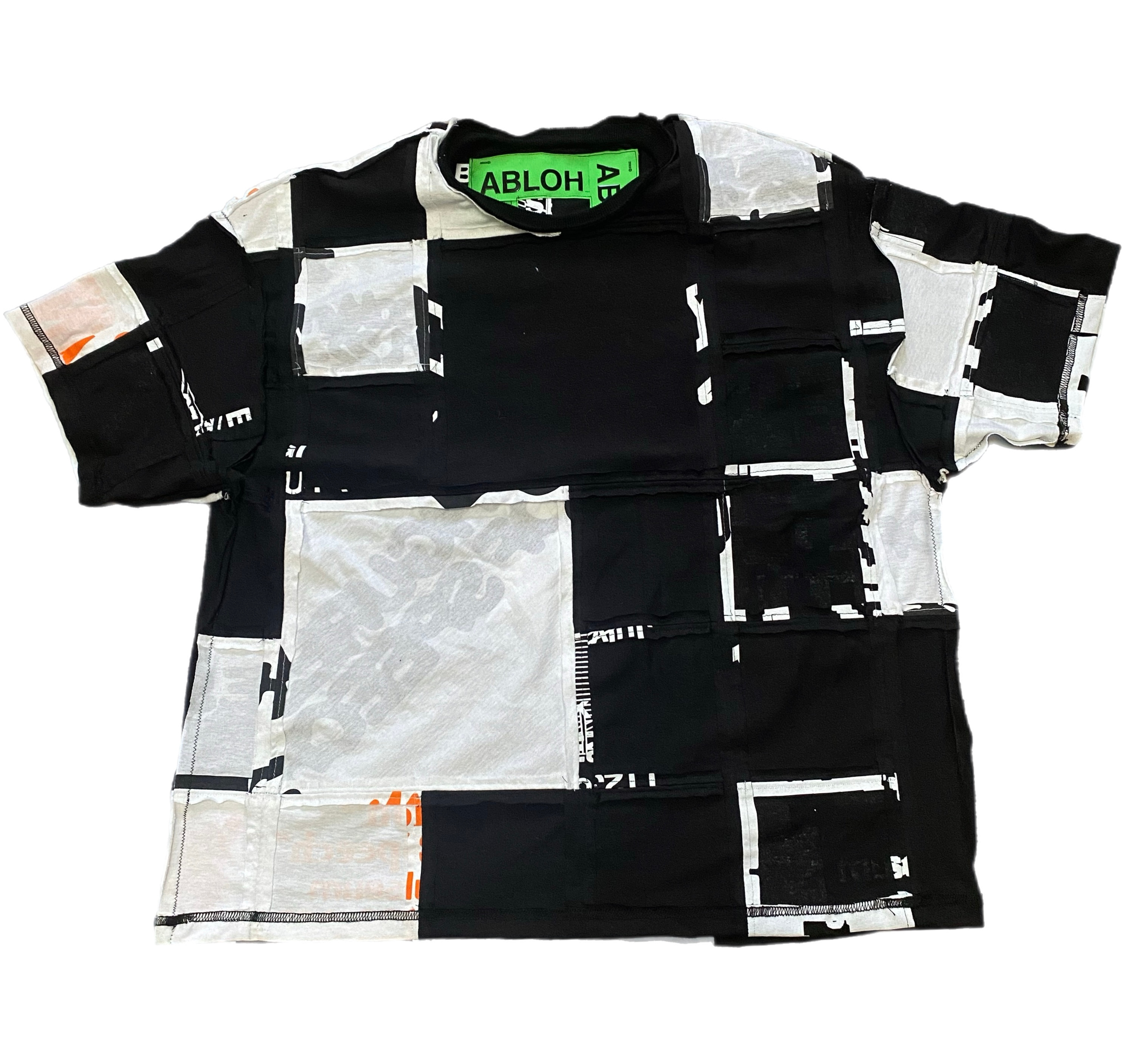
Also it may become apparent at this point that I am breaking some rules about sewing with knits. I am not using a stretch stitch for any of the patchwork. This means if you were to really pull on one of the seams it will break. However what I have found is the T-shirt still has plenty of stretch between all of the knit panels , especially diagonally, and I have had not had any issues of seams snapping during wear. In a weird way I also like breaking this rule because it means it would be tough to mass produce something like this. I don’t think a factory would be keen to take on this project given the liability of the snapping seams which makes the shirt all the more special.
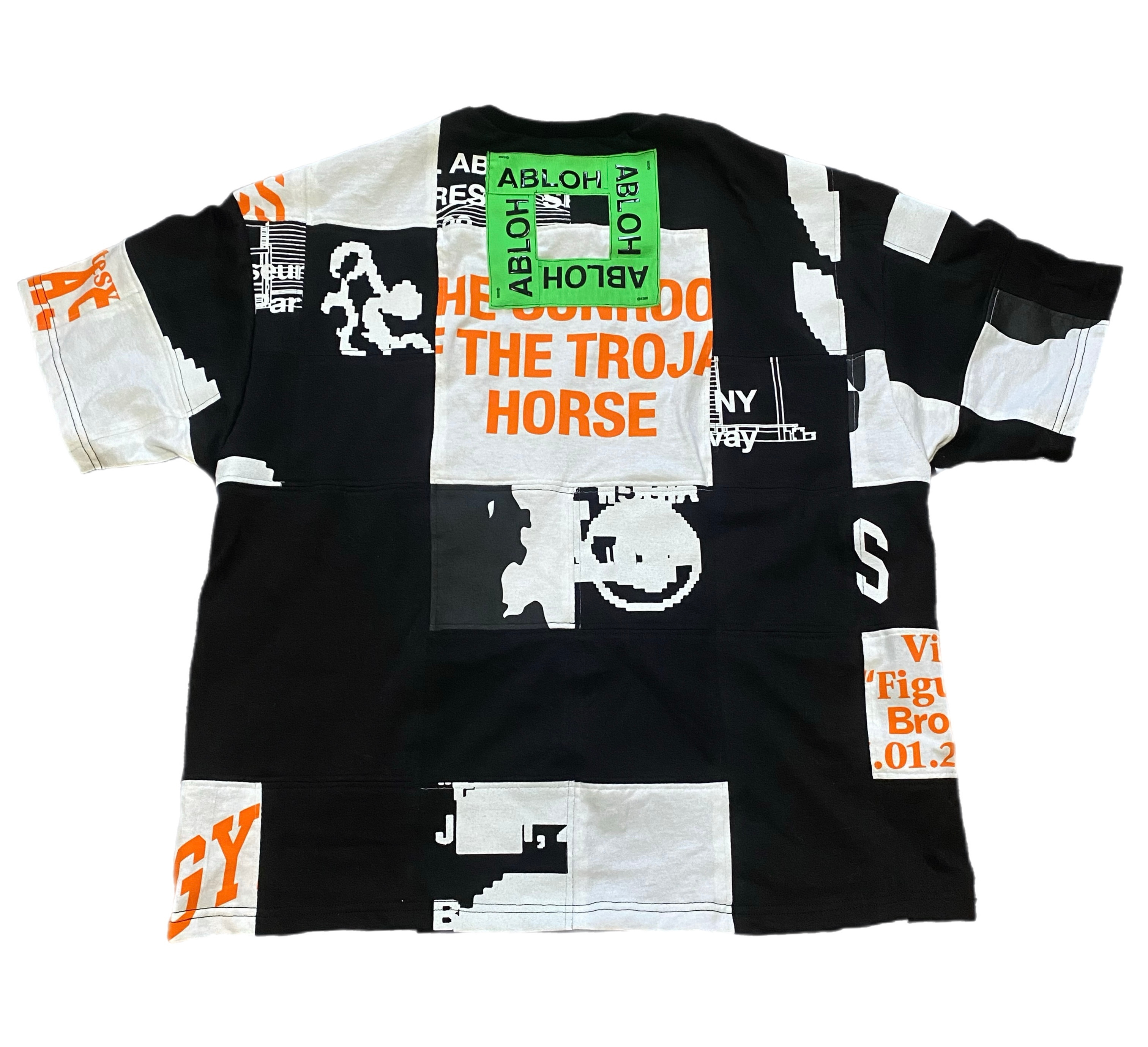
Once the patchwork textile was created I just cut out my pattern pieces and sewed them together as you would a typical T-shirt project. I was really happy with how it turned out and I was even able to use some of the original branding elements as a nice motif on the back. This T-shirt also survives in the washing machine and dryer which is of the utmost importance to me. All told I’m really happy with the project even thought the sustainability of the piece could be argued since I used new garments to create it. I have used this technique to create a T-shirt made entirely from shirts I found at thrift store which I may post about on here at some point.